

There is a simple reason why every economic reform in Nigeria ends in more hardship for the citizen. We are trying to deliver a cheap, efficient economy with an expensive, inefficient democracy. It cannot work. You cannot run one of the most expensive political systems in the world and expect to have money left to grow the economy. For over forty years we have been told to fix the economy and politics will fix itself. The opposite is true. The economy is a direct product of politics, and our politics is designed for sharing, not for production.

The numbers are damning. Of the N54.99 trillion budgeted in 2025, N14.32 trillion went to debt servicing while recurrent non-debt expenditure consumed N13.59 trillion. That is over half the budget before a single road is tarred or a single megawatt of power is generated. Meanwhile, senators earn up to N21 million per month in salary and allowances, and the President’s total package, salary plus allowances, can exceed N100 million monthly. The minimum wage was grudgingly fixed at N70,000 after months of strikes. The wage gap between political office holders and ordinary citizens is not just inequality; it is a structural drain on the economy.
The international comparison is equally telling. A comparative study of Nigeria and South Africa concluded that MPs in both countries earn too much to the detriment of their citizens. Nigeria’s budget in dollar terms was roughly $34 billion in 2025, down from $47 billion in 2023, yet we maintain a political structure that Morocco funds with $1,900 per citizen and Rwanda with just over $300. We are not just spending more; we are spending more to achieve less.
That cost is built into the structure itself. The Oronsaye Report of 2012 identified over 500 federal agencies and recommended merging and scrapping many of them. More than a decade later, it has been praised in speeches and quietly abandoned in practice, because every agency retained is another board, another fleet and another budget line defended by those whose livelihoods depend on it. We maintain 48 ministers for about 230 million people, while the United States runs a cabinet of fifteen secretaries for over 330 million. Each month, the three tiers of government gather in Abuja to share federation revenue, but sharing is not producing. Many states spend the bulk of their allocations on salaries and overheads, leaving little for capital projects. Pensions for former governors continue in states where teachers who served for thirty years wait years for gratuities.

We pay for this from a narrow base. Nigeria’s tax-to-GDP ratio is roughly 10 per cent, among the lowest in the world. We do not collect enough to fund our appetites, so we borrow to pay salaries and to service older borrowing. Meanwhile, households and small businesses pay a private tax of an estimated $14 billion every year on generators and fuel to compensate for a grid that cannot stay up. We have outsourced industrial policy to diesel importers.
We removed fuel subsidy and floated the naira, but we did not reform the political incentives that made those policies necessary in the first place. The subsidy cost over $10 billion annually at its peak, and its removal was hailed as brave and necessary. But the naira liberalisation led to a 70 per cent depreciation against the dollar, with GDP in dollar terms more than halving from $476 billion in 2022 to $188 billion in 2024. Inflation soared above 33 per cent by mid-2025.
Floating the naira without fixing power and the ports is not reform; it is simply devaluation. The IMF acknowledges that while growth accelerated to 3.4 per cent in 2024 and investor confidence strengthened, poverty and food insecurity have risen. The dollar goes to ₦1,600 and bread goes to ₦1,800 because we produce nothing that the world wants to buy. The revenue gains from subsidy removal (N15.8 trillion between June 2023 and December 2025) have not translated into visible improvements in infrastructure or industrial capacity. The money has simply moved from one inefficient pipeline to another.
We should also count what our democracy itself costs. The 2023 general election swallowed over N305 billion, and off-cycle governorship contests added billions more. On top of that are billions voted annually for constituency projects that are poorly executed and security votes that no auditor can properly trace. We are paying premium prices for a system that delivers substandard returns.
More damaging is the collapse of trust. Economic reform requires shared sacrifice, and shared sacrifice requires trust. Nigerians are tired because they have sacrificed before, in 1986, in 1993, in 2012, and in 2020. Each time they were told that later would be better. Later never came. When the National Bureau of Statistics says inflation has dropped to 21.88 per cent but garri has tripled in the market, people no longer believe government data. Nigerians on social media respond to official inflation data with gallows humour: “Na statistics we go chop?” When palliatives meant for the poor are found in warehouses and politicians’ homes, people no longer believe government intentions. You cannot distribute economic relief through a politically corrupt pipeline.
The World Bank confirms what ordinary Nigerians already know. Poverty rose from 56 per cent in 2023 to 61 per cent in 2024, before reaching 63 per cent in 2025, equivalent to about 140 million Nigerians living below the poverty line. Household incomes have not grown fast enough to offset still-elevated inflation, and the cumulative impact of past inflation shocks continues to weigh on real incomes. Macroeconomic gains are not transmitting to households because the political system that mediates it is broken.
No investor fears bad policy as much as he fears that a change of minister will mean a change of rules, or that his contract will not be enforced in court. That is not an economic problem, it is a political problem. Global democracy assessments classify Nigeria as a “hybrid regime,” reflecting persistent flaws in electoral integrity, rule of law, and political participation. Stronger institutions anchor prices. Countries with stronger institutions and lower levels of perceived corruption (Botswana, Rwanda, Mauritius) have recorded relatively low inflation compared with Nigeria. Nigeria’s problem is not a lack of economic ideas; it is that the political system cannot credibly commit to any of them.
There is no shortage of proposals. The 2025 Constitution Review has before it 87 amendment bills covering power devolution, state police, electoral reform, and judicial restructuring. Public demand for electoral reform is especially strong, with 91 per cent supporting mandatory electronic transmission of election results. But these reforms face the same obstacle as every other: the people who must approve them are the people who benefit from the status quo. Nigeria’s democracy has been described by scholars as “alien, expensive and exclusionary,” a system that has failed to deliver its dividends in the First, Second, Third, and Fourth Republics. The four-year presidential model borrowed from the United States has proven ill-suited to Nigeria’s realities, encouraging duplication and bloated appointments.
The voter must therefore make the cost of politics the central question of every election. Ask every candidate what he earns, how many aides he will appoint, how many vehicles his convoy will carry, and what he will cut. Demand the full implementation of the Oronsaye Report. Insist that the size of the executive be tied to revenue, not to appetite. Until the price of politics becomes an election issue, it will remain an economic burden.
Until we reform who holds power, how they get it, and how they are punished when they abuse it, through credible elections, judicial reform, and devolution, every economic reform will be another beautiful lie written in Washington, applauded in Lagos, and paid for with suffering in Bodija, Aba and Gusau. The economy is a product of politics. Fix the politics, and the economy will follow. Leave the politics untouched, and no amount of subsidy removal or naira floating will deliver anything but more hardship.
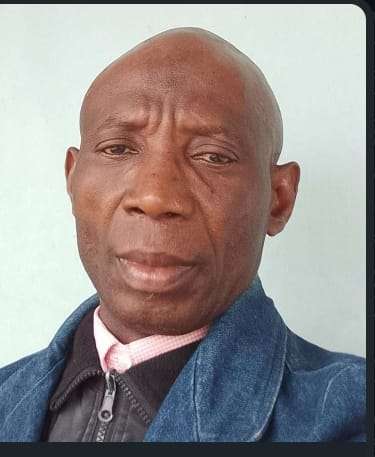
Fẹ́mi Akínṣọlá is a public affairs analyst and development commentator.