

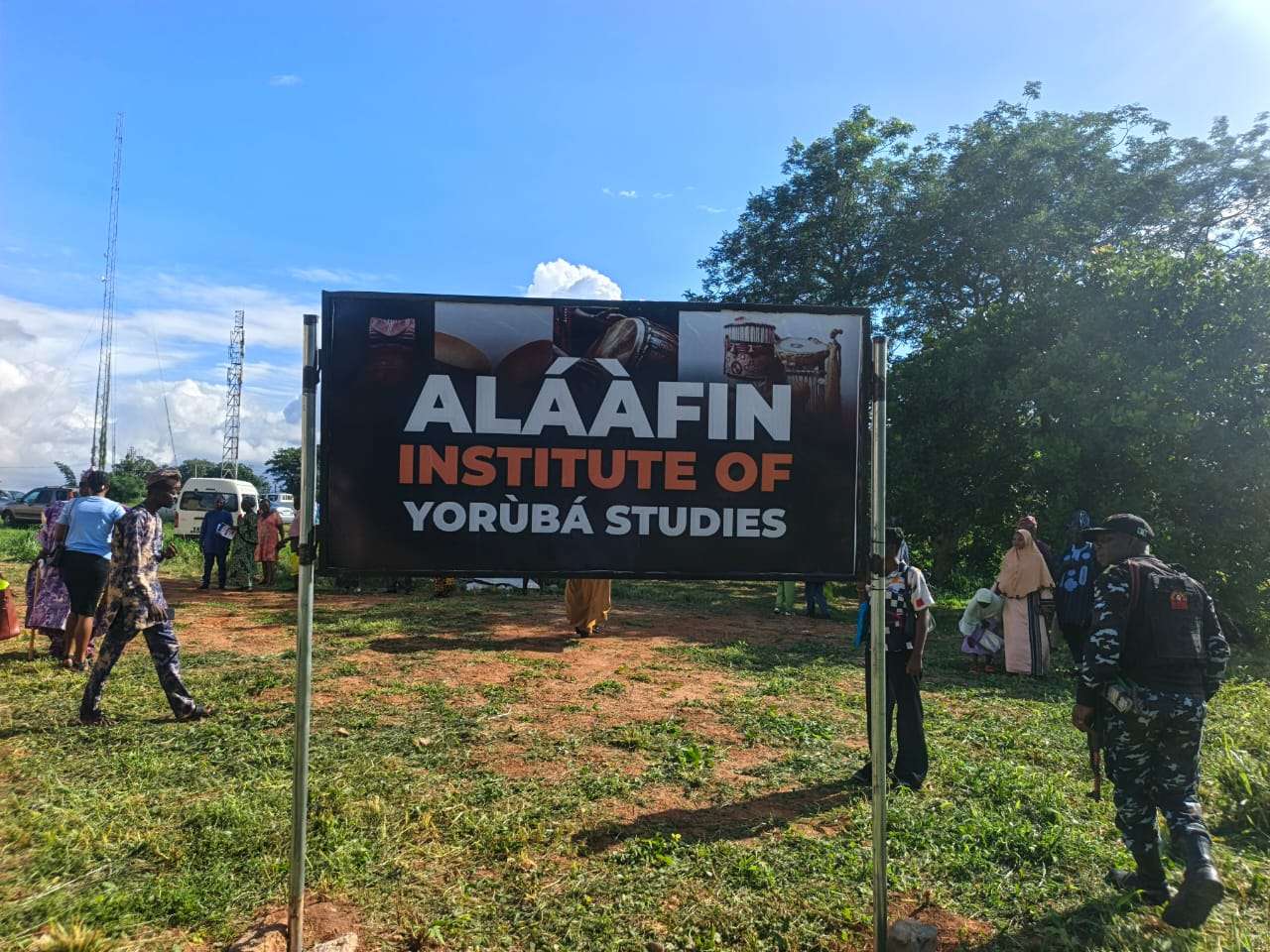
Professor Toyin Falola on Tuesday, called on Nigerian universities and other knowledge institutions to accord Yorùbá intellectual traditions the same academic recognition enjoyed by classical Western philosophies, arguing that African knowledge systems should no longer be treated as peripheral or inferior within global scholarship.


Delivering the keynote address titled “Yorùbá Mythologies and Their Relevance Today” during the inauguration of the Alaafin Institute of Yoruba Studies at Emmanuel Alayande University of Education, Oyo, Falola said the time had come for Nigeria to reposition indigenous knowledge as a central component of higher education and intellectual inquiry rather than a cultural relic.
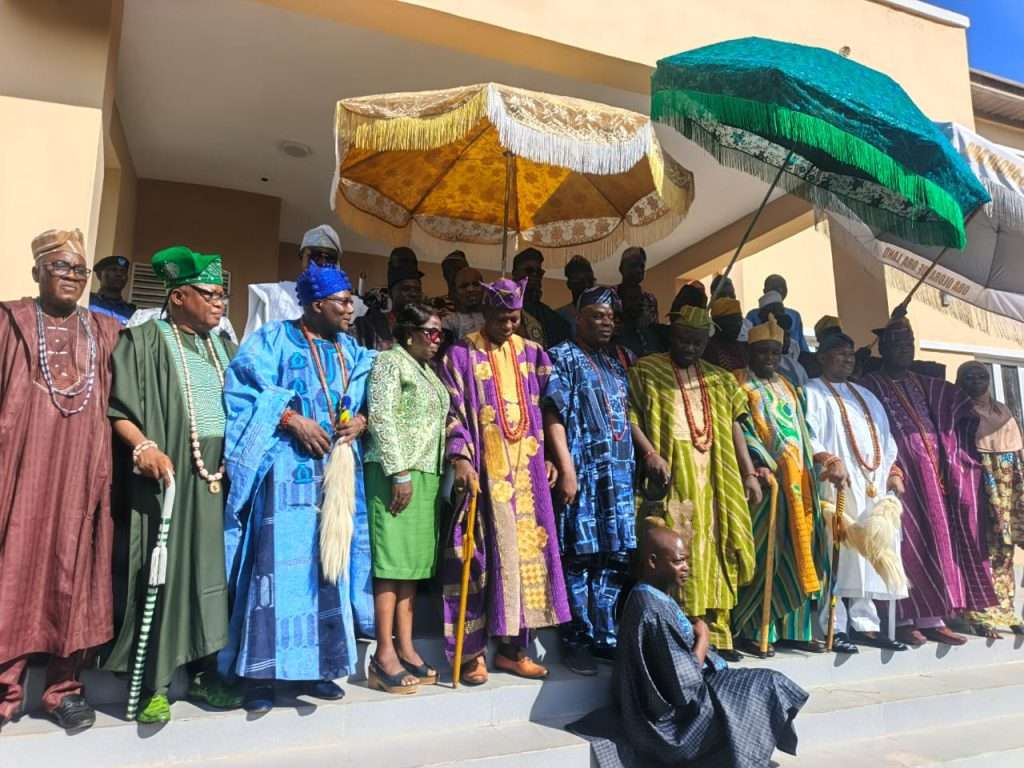
The inauguration, themed “Preserving the Past, Educating the Future: The Renaissance of Yoruba Intellectualism,” attracted scholars, traditional rulers, academics, students and cultural enthusiasts who gathered to celebrate the institutionalization of Yoruba studies and its place in national development.
In recognition of his remarkable contributions to Yoruba studies, the Alaafin Institute of Yoruba Studies presented Falola with a prestigious award celebrating his global promotion of Yoruba language, history and culture. The institute cited his decades of influential scholarship, academic leadership, publications and international engagement as evidence of his unwavering commitment to preserving and advancing Yoruba civilisation.
Speaking Falola noted that Yorùbá mythology represents far more than folklore or religious narratives, describing it instead as a sophisticated philosophical system that addresses enduring human questions about morality, governance, identity, justice, spirituality and existence.
According to him, the challenge confronting African knowledge is not a lack of intellectual substance but the unwillingness of academic institutions to accord it equal scholarly legitimacy.
“The issue is not whether Yorùbá mythology is significant. The issue is whether we, the intellectual and cultural institutions that generate and disseminate knowledge, the universities, the publishers, the museums, the policy organizations, are prepared to accept it as such,” he declared.
He urged universities to move beyond symbolic appreciation of African traditions and institutionalize them within mainstream academic disciplines.
“This implies putting it in philosophy courses with Aristotle and Descartes. To treat the corpus of Ifá as a serious object of scholarship, with the same resources as are devoted to Greek or Latin literature,” Falola said.
He maintained that such recognition should also extend to political philosophy, comparative religion, ethics, history, literature, anthropology and public policy.
Earlier in his welcome address, the Vice-Chancellor, Professor Olanrewaju Olaniyan explained that the establishment of this Institute arises from an awareness that the twenty-first century presents both opportunities and responsibilities for African scholarship.
According the him, “Across the world there is renewed interest in indigenous intellectual traditions, cultural heritage, comparative philosophy, museum studies, and digital humanities. Yet significant aspects of Yoruba civilisation remain dispersed across archives, museums, libraries, private collections, and oral traditions that are increasingly vulnerable to neglect or irreversible loss.”
“Every great university is ultimately defined not only by the number of its faculties or the size of its enrolment, but by its willingness to cultivate knowledge that speaks both to its immediate environment and to the wider human community, adding that Universities flourish when they preserve memory, interrogate inherited assumptions, generate new ideas, and prepare succeeding generations to engage confidently with an ever-changing world. It is in pursuit of this noble responsibility that we establish the Institute of Yoruba Studies.”
The Professor of Economics further submitted that “the choice of Oyo as the home of this Institute is neither incidental nor merely symbolic. It is rooted in history. Oyo occupies a distinguished place in the evolution of Yoruba civilisation and in the wider history of West Africa.
According to him, over several centuries, the Oyo Empire emerged as one of the most influential political formations within its geopolitical axis, distinguished by sophisticated institutions of governance, an extensive commercial network, military organisation, diplomatic engagement, and remarkable achievements in the arts and culture. Therefore, we can proudly say that Ajisebi Oyo l’aari i; Oyo ki I se bi I Baba enikan.”
At the event, the Alaafin of Oyo, Aláṣẹ Èkejì Òrìṣà, Oba Abimbola Akeem Owoade led other traditional Kings and dignitaries to commission the newly established Alaafin Institute of Yoruba Studies Office.
Dignitaries from traditional institutions, academia and the cultural sector converged on Emmanuel Alayande University of Education for the inauguration, underscoring the international significance of the event.
His Imperial Majesty, the Alaafin of Oyo, Iku Baba Yeye, Oba Abimbola Akeem Owoade, Elewu-Etu I, was the Royal Father of the Day. The university’s Vice-Chancellor, Professor Olanrewaju Olaniyan, was the Chief Host, while Professor Akinkunmi Alao, Dean, Faculty of Arts Education coordinated the proceedings as the Host.