

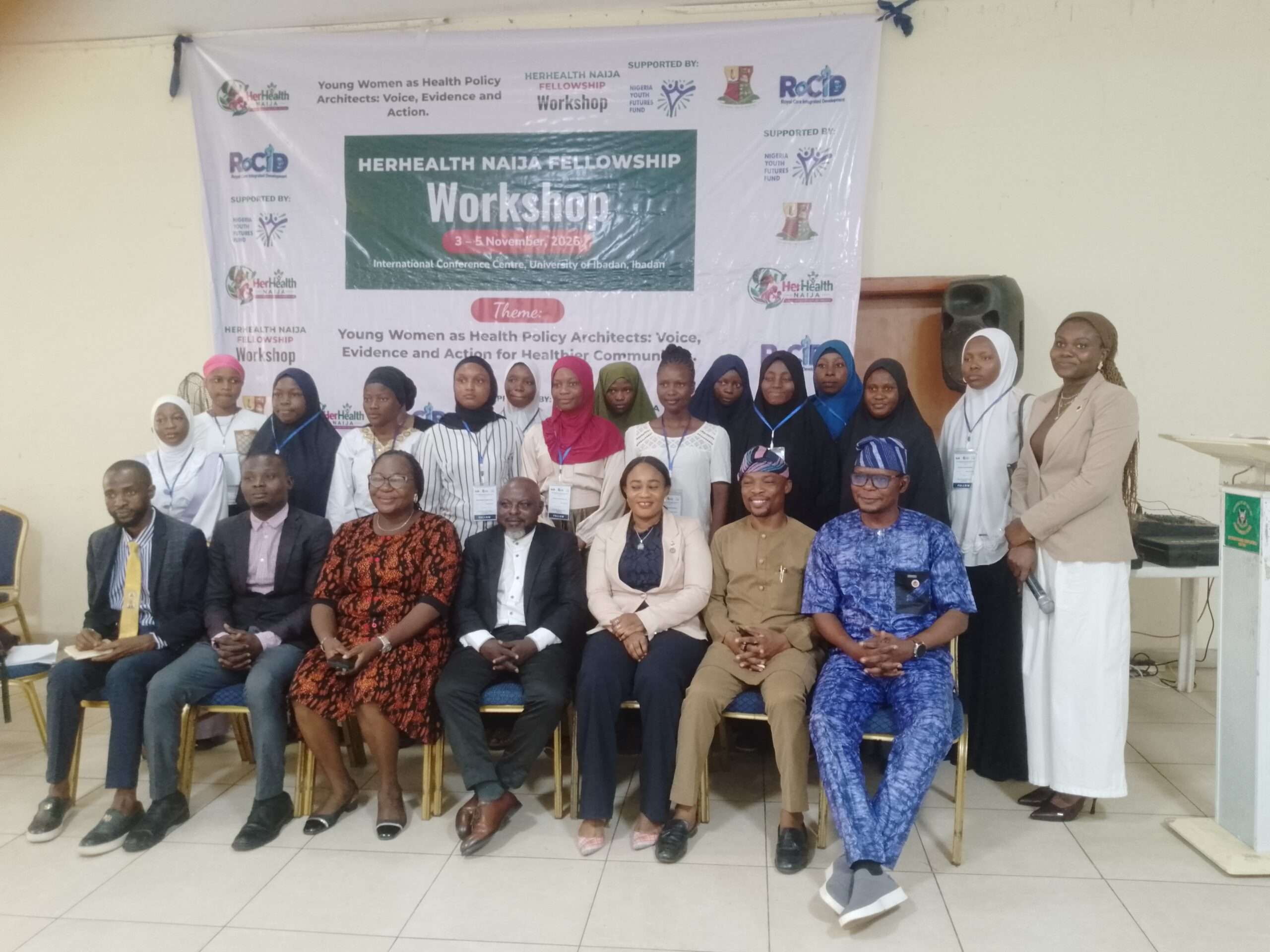
Twenty five young women have been inducted into the first cohort of the HerHealth Naija Health Policy Architects Fellowship Programme, an initiative aimed at strengthening Reproductive, Maternal, Newborn, Child And Adolescent Health (RMNCAH) services through community-driven research, evidence-based policies and effective advocacy.
The induction and opening ceremony of the three-day fellowship training workshop took place on Tuesday, November 3, 2026, at the International Conference Centre, University of Ibadan, Ibadan.

The programme, organised by Royal Care Integrated Development (RoCID), with support from the Nigeria Youth Futures Fund (NYFF) through its Young Leaders Development Fund, is designed to empower young women with the knowledge and skills required to participate actively in health policy formulation, implementation and accountability.
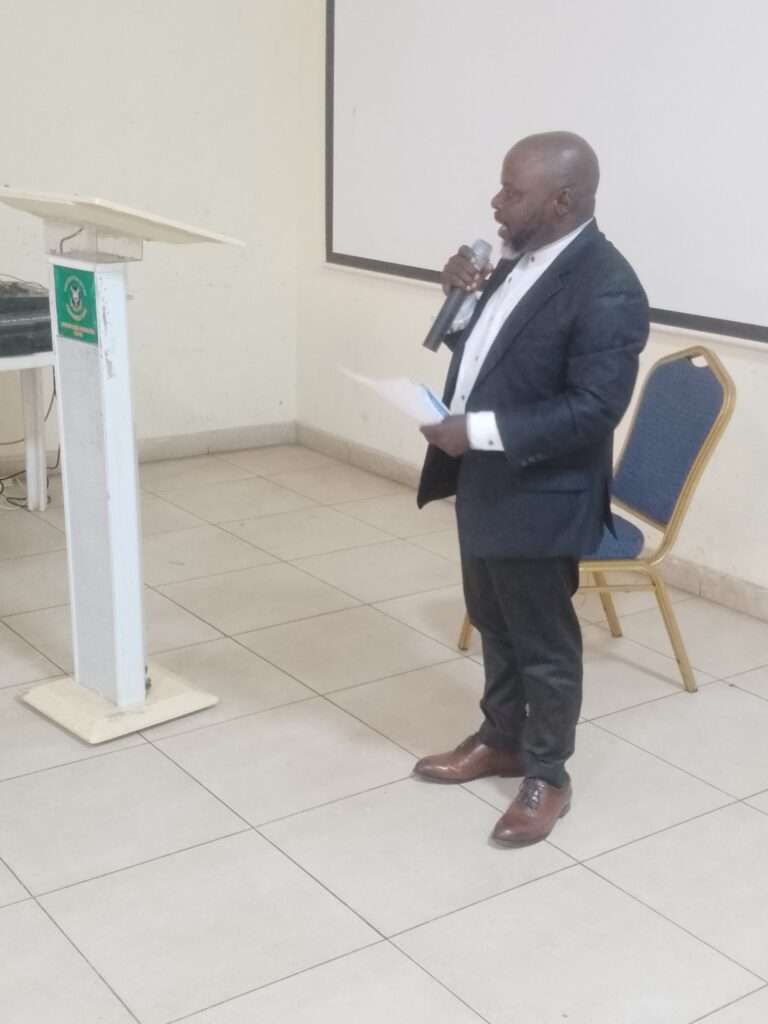
Speaking at the event, the Oyo State Commissioner for Health, (Dr) Oluwaserimi Ajetunmobi, who was represented by Mrs Folashade Oladele, commended the organisers for investing in young women’s leadership and capacity development in the health sector.

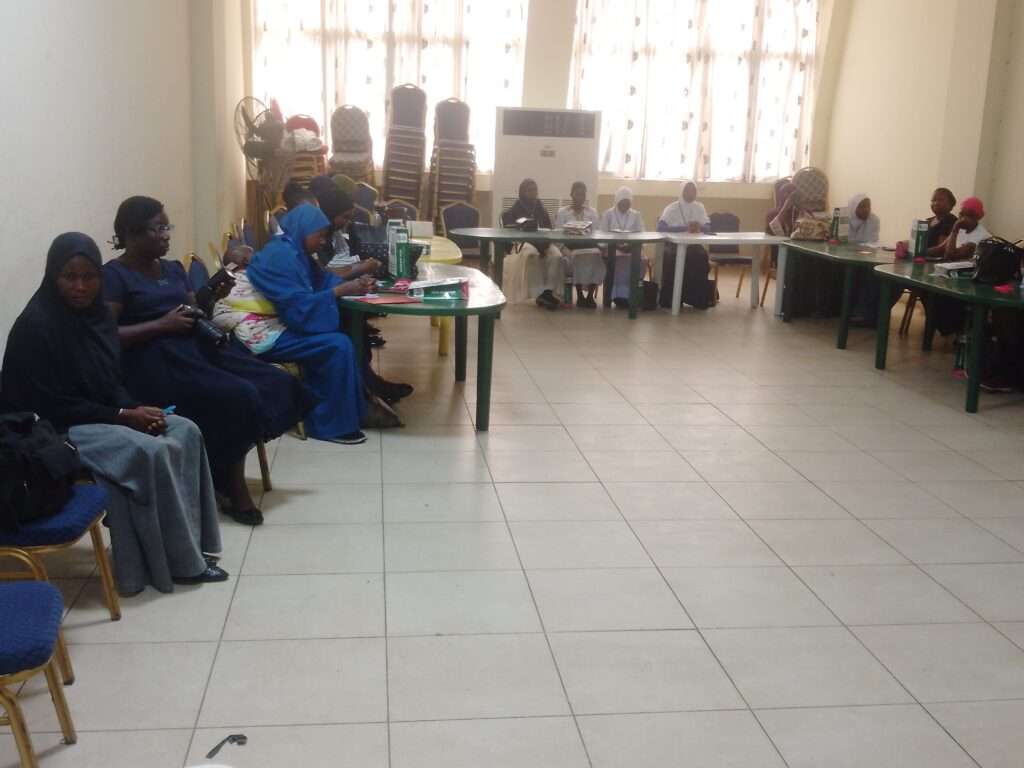
The Commissioner described the initiative as both an empowerment programme and a health development imperative, particularly in addressing challenges associated with reproductive, maternal, newborn, child and adolescent health.
Dr. Ajetunmobi noted that the practical nature of the fellowship, including its ethically approved community needs assessment, to ensure that the participants’ advocacy and recommendations were based on credible data and the actual experiences of people in their communities.
She also expressed optimism that the proposed development of at least five evidence-based policy memoranda and subsequent state-level policy dialogue would help translate the participants’ training into meaningful improvements in healthcare governance.

In his address, Honourable Faysol Oluwakemi, the Executive Director, Get Healthy Africa Initiatives, and chairman of the programme, emphasized the importance of involving young women in the formulation and implementation of healthcare policies.
Hon. Oluwakemi, who is involved in youth development and health advocacy through the Get Health Africa Initiative, said young women should not merely be beneficiaries of government policies but should possess the knowledge, influence and have capacity to shape decisions affecting their lives.
“The theme of this workshop is both timely and significant. For too long, young people, particularly young women, have largely been regarded as beneficiaries of policies rather than active contributors to their formulation and implementation.
“I strongly believe that young women should not merely have a seat at the table where health policies are discussed; they must have the voice, knowledge and influence to shape the decisions being made.
“However, meaningful participation goes beyond having a voice. It requires evidence to support our advocacy, the courage to challenge existing gaps, and the commitment to translate ideas into practical actions that improve people’s lives.
“As young women, you must understand that your experiences, research, community engagement and perspectives are valuable resources in designing effective health policies.
He urged the them to regard the opportunity as a responsibility to their communities, stressing that their research, experiences and advocacy efforts could contribute significantly to sustainable healthcare development.
He commended the Nigeria Youth Futures Fund for supporting youth-led development initiatives and creating opportunities for young people to contribute meaningfully to society.
“I also commend the Nigeria Youth Futures Fund for supporting youth-driven initiatives and creating opportunities for young people to contribute meaningfully to development, he added
In his opening remarks, the Executive Director of RoCID, Dr Kehinde Adegoke, said the initiative was established to address the persistent gap between healthcare policies and the realities experienced by women and girls in different communities.
Dr. Adegoke, who described Nigeria’s maternal and newborn health challenges as alarming, cited national estimates for 2024, which put the maternal mortality ratio at approximately 572 deaths per 100,000 live births.
He identified several challenges confronting women and girls, including financial barriers to healthcare, inadequate access to health facilities, limited adolescent-friendly services and difficulties faced by women with disabilities in accessing healthcare.
“Nigeria still carries one of the heaviest burdens of maternal and newborn deaths in the world, and National estimates from 2024 put the maternal mortality ratio at about 572 deaths for every 100,000 live births. Behind each number is a mother, a daughter, a sister: a family changed forever.”
According to him, young women who are directly affected by these challenges are often excluded from the processes of designing and monitoring health policies.
He explained that the six-month fellowship would equip the 25 selected participants with practical skills in health policy analysis, participatory research, policy writing, legislative engagement and advocacy.
He added that the young women would undertake ethical, community-driven assessments of maternal, newborn, child and adolescent health services, translate their findings into evidence-based policy recommendations and engage government institutions through policy dialogues and formal policy memoranda.
According to him, the programme will also feature a podcast series and digital advocacy campaign to amplify the voices and experiences of women and girls in their communities.
Dr. Adegoke while expressing gratitude to the Nigeria Youth Futures Fund for believing in the vision and supporting it through the Young Leaders Development Fund, thanked the Oyo State Ministry of Health, the Oyo State Primary Health Care Board, Oyo State House of Assembly and other government institutions for their presence and support.
“We also thank our facilitators, partners, the media and the RoCID team, whose hard work brought us to this day.”
Dr. Adegoke urged them to demonstrate professionalism, humility, integrity and commitment while gathering information from communities, stressing the need to protect the confidentiality and dignity of individuals who share their experiences.
Also, in her goodwill message, the Clerk of the Oyo State House of Assembly, Mrs Taiwo Muraina, ably represented by Olayanju Sodiq, commended RoCID, the Nigeria Youth Futures Fund and other stakeholders for the initiative.
Mrs Muraina particularly welcomed the programme’s inclusive approach, which provides opportunities for young women, including persons with disabilities and caregivers of persons with disabilities, to contribute to health policy development.
“I am particularly delighted that the fellowship seeks to equip twenty-five young women, including persons with disabilities and caregivers of persons with disabilities, with the requisite knowledge and skills to participate meaningfully in health policy formulation, research and advocacy.
“This underscores the importance of inclusive governance and recognizes that effective public policies are better developed when the voices and experiences of those directly affected are taken into consideration.
She observed that community needs assessments, policy memoranda and engagements with relevant government institutions would help identify gaps in healthcare delivery and strengthen legislative oversight and accountability in the sector.
“I therefore encourage the participants to embrace this opportunity with dedication and a strong sense of responsibility, hoping that the knowledge acquired would translate into meaningful contributions to policy development and improved healthcare outcomes.
“I also commend RoCID and its development partners for investing in the leadership capacity of young women and urge them to sustain the initiative by ensuring that the findings and recommendations generated receive the necessary attention from relevant stakeholders.
She assured the organisers of the importance of legislative engagement and appropriate policy frameworks in promoting improved healthcare services, while encouraging the young women to ensure that their recommendations receive the attention of relevant authorities.
“Once again, I congratulate the organisers and all participants on this laudable initiative. I wish you fruitful deliberations and a successful fellowship programme”
In her keynote address, the Global Fellow, WomenLift Health and Chairperson Association of Medical Laboratory Scientists of Nigeria, Oyo State Branch, Mrs Akinbile Adebola said the induction marked an important step towards ensuring that women actively participate in decisions affecting their healthcare and well-being.
She declared that health policies should no longer be designed about women without their involvement, but should be developed by women, with women and for women.
She explained that the 25 participants were selected from hundreds of applications received across the 33 local government areas of Oyo State because of their community connections, experience and potential to contribute to healthcare development.
Adebola outlined three major responsibilities for the young women, which included: generating community-driven evidence, translating research findings into policy recommendations and engaging policymakers to influence decisions that would improve healthcare delivery.
She urged them to take their responsibilities seriously, remain courageous and united, and ensure that their findings were accurate, credible and capable of influencing government policies.
The organisers expressed appreciation to the Oyo State Ministry of Health, the Oyo State Primary Health Care Board, the Oyo State House of Assembly, development partners, facilitators and other stakeholders for their support.
The fellowship is expected to strengthen the participation of young women in health governance and promote a more inclusive, accountable and evidence-driven healthcare system in Oyo State.
The initiative is anchored on the belief that sustainable improvements in women’s and children’s healthcare can only be achieved when the voices, experiences and needs of the communities concerned are reflected in government policies and decisions.