

The Independent National Electoral Commission (INEC), National Orientation Agency (NOA), police and other stakeholders have reviewed the 2026 Osun State governorship election, identifying lessons and strategies for improving electoral credibility and peaceful participation ahead of the 2027 general elections.
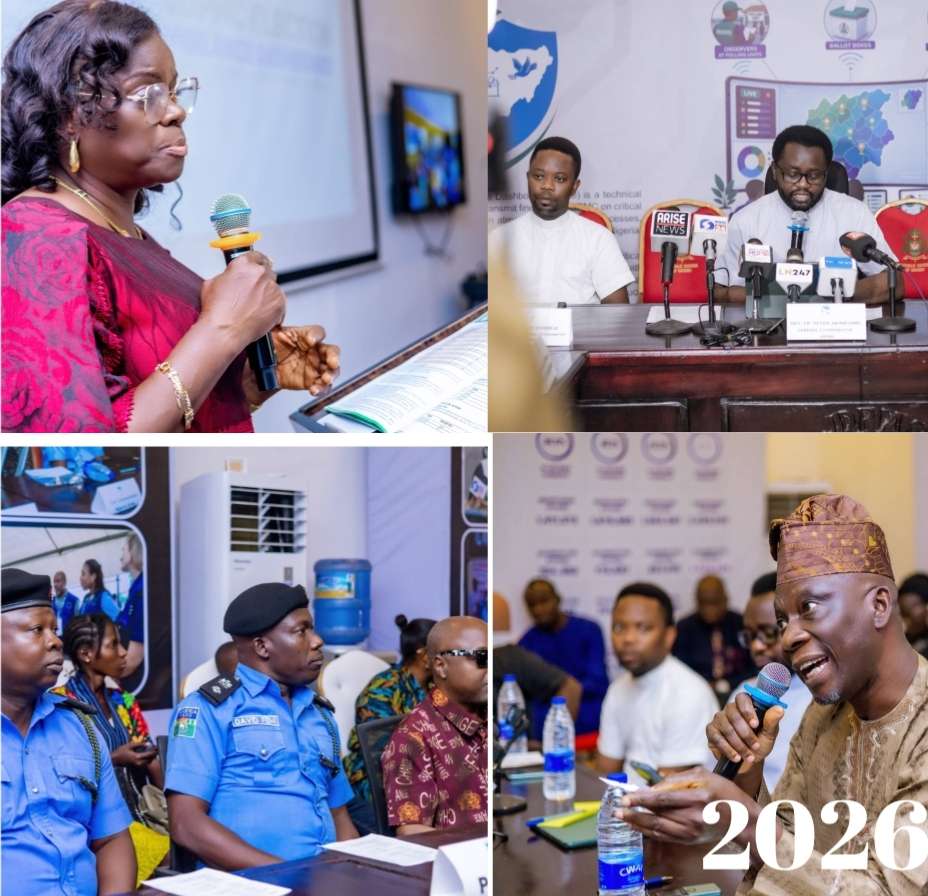
The review was held at a post-election stakeholders’ dialogue organised by the Justice Development and Peace Makers Centre (JDPMC), which also unveiled its JDPMC Election Vigilance Dashboard (JEVID 2027) as part of efforts to strengthen election monitoring and accountability.

Speaking at the event, the Osun State Resident Electoral Commissioner, Barrister Toyin Babalola, attributed the relatively peaceful conduct of the governorship election to regular engagement with stakeholders, extensive voter education and adequate preparation of electoral personnel.
Babalola said the commission deliberately sustained consultations with the media, civil society organisations, transport operators and road safety officials to promote peaceful participation and ensure a smooth electoral process.
She explained that the engagement provided opportunities to educate stakeholders on the importance of peaceful elections and their respective responsibilities in ensuring the success of the exercise.

The REC also disclosed that INEC had intensified training for its personnel to sustain the standards achieved during the governorship election.
According to her, the commission had commenced in-house capacity-building programmes and recently conducted election management training for its staff.
“We are doing this to ensure that we do not go below the standard we have set during the governorship election,” she said.
Also speaking, the Osun State Director of the National Orientation Agency, Mr. Stephen Adebiyi Adefarasin, said the agency’s contribution to the election centred on voter education, national orientation and the promotion of peaceful democratic values.
He said NOA carried out sensitisation campaigns across the 30 local government areas of the state, educating residents on PVC collection, continuous voter registration, polling unit locations and the need to reject vote-buying.
Adefarasin said the agency also translated voter education materials into Yoruba and Pidgin English to ensure that its messages reached people at the grassroots.
He stated that traditional rulers, religious leaders, market women, transport workers, students and persons with disabilities were also engaged as part of the sensitisation programme.
He said, “Our role was not to conduct elections like INEC or secure them like the police and other security agencies, but to prepare the minds of the voters.”
The NOA director, however, identified persistent vote-buying, voter apathy among some women and youths, misinformation on social media and inadequate understanding of election technology among rural voters as major challenges observed during the exercise.
He also expressed concern over the circulation of fake election results and inciting messages on WhatsApp and Facebook before the official announcement by INEC.
Adefarasin recommended continuous voter education, stronger collaboration between INEC, NOA and civil society organisations, and increased involvement of traditional and religious institutions in peacebuilding.
He further called for targeted sensitisation programmes for women, youths, persons with disabilities and first-time voters, adding that NOA was ready to lead stronger campaigns against misinformation through its National Fact-Checking Desk.
The police also assured residents of adequate security arrangements ahead of the 2027 general elections.
The representative of the Osun State Commissioner of Police, CSP Bodunde Femi, gave the assurance, pledging that the command would continue to protect lives and property before, during and after the elections.
Earlier, the General Coordinator of JDPMC, Rev. Peter Akinkunmi, said the dialogue was organised to examine the successes and shortcomings of the 2026 governorship election and develop practical measures to improve future electoral processes.
Akinkunmi described the election as a remarkable democratic experience, considering the tense atmosphere that preceded the exercise.
He noted that despite threats, political tension and reported incidents of violence during the campaign period, the election eventually recorded substantial voter participation and a relatively peaceful atmosphere.
He said, “We cannot just go about business as usual simply because the election has ended well and everyone appears satisfied. We rather have the obligation to revisit the process and interrogate why the bloody pre-election atmosphere eventually led to a peaceful election day.”
He urged stakeholders to objectively examine the factors responsible for the outcome of the election, warning against assuming that future elections would automatically enjoy similar success without addressing identified weaknesses.
The JDPMC coordinator also raised concerns about security agencies’ communication on violent incidents, particularly delays in releasing information that could allow political actors to give partisan interpretations to security developments.
He said, “If the gap in communication remains like this into the heat of the campaign, politicians may fill in the gap with politically coloured reports, leaving the police to struggle to correct the impression.”
Akinkunmi further called for attention to the leadership situation within IPAC and the possible implications of political alliances for political competition and the creation of a level playing field for all contestants in the state.
He urged stakeholders to use the dialogue to develop strategic action plans capable of guaranteeing improved elections at reduced costs, particularly with zero loss of human lives.
The event was attended by representatives of political parties, religious leaders, civil society organisations, the media, traditional institutions and other stakeholders in the electoral process.