
By Esther Ola Ogundipe

The twin trouble of cows and cars in Nigeria, especially in the capital city, has been trending in recent times. A Channels TV interviewer recently tried to wake the sleeping dog when she asked the FCT Minister, Nyesom Wike, about the menace of roaming cows in the FCT.

The Minister tactfully passed the buck to the NSA. Obviously, he was not ready to rock the boat at a time when election campaigns are afoot to garner votes across the country. For him, any careless move could cost his master the votes of those who hold the reins.
Arguably, the journalist must have been perturbed not only by the menace of cows but also by the reprehensible driving culture in a country bedecked by lawlessness and governed by impunity. Practices frowned upon in other climes find not only tolerance but also well-furnished accommodation in Nigeria.
Every serious football team puts forward its best eleven. For the Nigerian seat of power, it is often the reverse. It projects itself to the international community as the poster boy of lawlessness.
FCT roads welcome foreigners to the country with cows and lawless drivers. Not even the airport road, the gateway to the capital, is spared this madness. The roads are occupied by cows roaming unrestrained, and by drivers and riders who appear to be a law unto themselves. They have little or no regard for traffic regulations, ethical driving, or the safety of other road users.
For them, traffic lights, road signs, and the presence of road safety officials are mere decorations. They evoke no fear or command obedience.
Foreign visitors and investors arrive to their chagrin – in a capital that warns them of the dangers that await them or their investments. The warning sign is clear: laws do not govern here; personal discretion does.
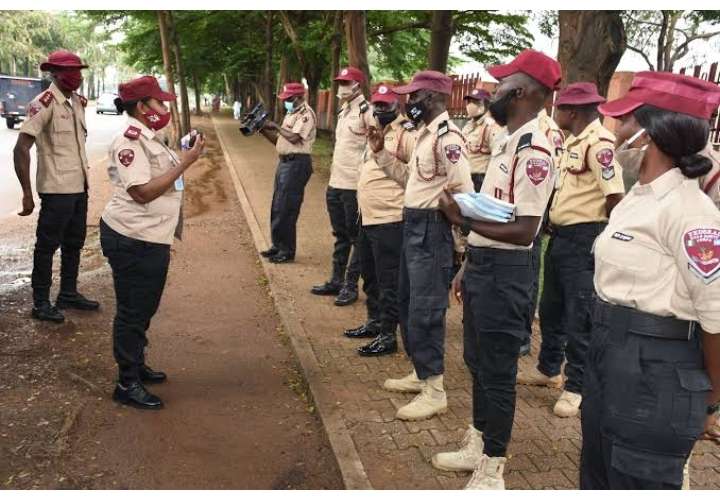
This is the scenario that ushered in the newly introduced FRSC Act (Amendment) Bill passed by the Senate. Awaiting presidential assent, the Bill proposes stiffer penalties for speeding, reckless and drunk driving, violations of traffic signs and traffic lights, and other dangerous conduct that has turned many highways into corridors of tragedy.
The Bill, however, ignores the menace of cows and the danger they pose to road users on Nigerian roads.
Despite the omission, the move deserves commendation. It assuages the worries of Nigerians who are daily confronted by the risks posed by reckless drivers and riders. Yet it also raises a fundamental question: Has Nigeria’s road safety crisis been caused by weak laws or weak enforcement?
The answer is straightforward. Nigeria does not suffer from a shortage of traffic laws. It suffers from a chronic failure to enforce them.
In his thought-provoking piece, Nigeria, a Graveyard of Good Intentions, veteran journalist Lanre Ogundipe described Nigeria as a country where noble policies often perish because implementation is weak, inconsistent, or compromised. That observation remains painfully relevant to this discourse.
Interestingly, the FRSC already possesses extensive statutory powers to regulate road traffic, arrest offenders, and prosecute violations. Nigeria’s traffic laws adequately prohibit dangerous driving, speeding, driving under the influence of alcohol, disregard for traffic signs, and numerous other offences that endanger lives daily.
The real problem, therefore, has never been the absence of a legal framework or the authority to enforce the law. It has been the inconsistency, selectivity, and, at times, apparent reluctance to exercise that authority. And nothing erodes respect for the law more quickly than weak or selective enforcement. Such indulgence undermines public confidence in the Corps and weakens the moral authority of the law itself.
For years, this writer has persistently campaigned against reckless driving, particularly within the FCT. Petitions to the FRSC and representations to successive FCT Ministers only yielded positive responses under the current Minister, as attested by official pronouncements and public warnings. But warnings alone do not change behaviour. Only consistent enforcement does.
The consequence of weak enforcement is the impunity witnessed across Abuja and many other parts of the country, where motorists routinely drive against traffic, ignore red lights, overspeed, overtake dangerously, and violate basic traffic regulations in full view of enforcement officers, including the FRSC. Such violations have become so commonplace that traffic lights are increasingly treated as decorative street furniture rather than instruments of law.
The consequences extend beyond the tragic loss of lives and destruction of property. Persistent disregard for traffic regulations erodes respect for the rule of law and projects an unflattering image of Nigeria before the international community.
Visitors observe commercial bus and taxi drivers violating traffic laws with impunity, while convoys of the politically powerful and other privileged motorists routinely commit similar or even more dangerous violations without consequence, often in the glare of law enforcement officers, including the FRSC.
As the nation’s capital, Abuja is the first point of contact for diplomats, foreign investors, development partners, and other international visitors. Their impression of the country is often formed long before official meetings begin.
When they encounter motorists driving against traffic, ignoring traffic lights, and violating basic road regulations with apparent impunity, and observe convoys of the politically powerful and other privileged motorists routinely committing similar or even more dangerous violations without consequence, often in the glare of law enforcement officers, they form a perception of indulgence. This diminishes confidence not only in traffic administration but also in the country’s overall governance and regulatory culture.
The gravity of impunity in traffic violations is so compelling that decisive penalties for traffic violations cannot be compromised. In essence, the certainty of punishment, not merely its severity, is the true deterrent to lawlessness. A modest penalty imposed consistently will achieve far more than a harsh sanction that exists only in the statute book.
If this amendment merely increases fines without transforming the culture of enforcement, Nigeria will have achieved very little. The country cannot legislate its way out of indiscipline while tolerating administrative complacency.
The FRSC must, therefore, look beyond tougher penalties. It must embrace technology-driven enforcement through wider deployment of speed-detection devices, automated surveillance, electronic ticketing, digital offender databases, and transparent performance reporting.
Equally important are better logistics, continuous professional training, and improved welfare for personnel who daily place themselves in harm’s way to keep our roads safe.
Above all, enforcement must be impartial. The law must apply with equal force to the commercial driver, private motorist, government official, security convoy, and politically connected. The rule of law begins where privilege ends.
Against this backdrop, the FRSC must do all that is required to prevent the amended Bill from becoming another addition to Nigeria’s unfortunate catalogue of good intentions.
Its success will not be measured by the size of the fines enacted by the National Assembly. It will be measured by whether Nigerians can once again travel on roads where traffic laws are obeyed because enforcement is certain, impartial, and beyond negotiation.
The National Assembly has played its part. The President is expected to complete the legislative process through assent. Thereafter, the greater responsibility rests squarely with the FRSC.
The Corps already possesses substantial legal authority. What Nigerians now expect is not another cycle of public enlightenment campaigns and official warnings, but an unmistakable institutional commitment to firm, fair, and consistent enforcement.
Only then will this amendment become more than another well-intentioned law.
Only then will it save lives, restore confidence in road safety administration, and reaffirm a simple but enduring principle: on Nigeria’s highways, no one is above the law.
Esther Ola Ogundipe
Retired Diplomat and Public Affairs Commentator