

The Oyo State Primary Health Care Board (OYSPHCB), in collaboration with the United Nations Population Fund (UNFPA) and the Centre for Comprehensive Promotion of Reproductive Health (CCPRH), has intensified efforts to end Female Genital Mutilation (FGM) through a Community Dialogue and Consensus Building programme across seven Local Government Areas of the state.

The programme covered Saki West, Surulere, Lagelu, Afijio, Oyo East, Iseyin and Kajola Local Government Areas, with five communities selected from each LGA, bringing the total to 35 communities. The engagement aimed to educate residents on the dangers of FGM, address harmful cultural beliefs and encourage collective action towards abandoning the practice.
Speaking at the programme, the Executive Secretary of OYSPHCB, Dr. Muideen Olatunji, described FGM as a harmful practice that threatens the health, dignity and well being of girls and women. He emphasised that ending the practice requires the collective commitment of everyone, particularly traditional rulers, religious leaders, parents, women groups and other community stakeholders.
Dr. Olatunji urged community members to uphold positive cultural values and abandon traditions that expose girls and women to health risks. He reaffirmed the Board’s commitment to promoting reproductive health awareness and protecting vulnerable groups through sustained advocacy and community engagement.

Also speaking, the Director of the Centre for Comprehensive Promotion of Reproductive Health, University College Hospital (UCH), Ibadan, Emeritus Professor Oladosu Ojengbede, represented by Mr. Emmanuel Yelotan, stressed that community ownership and collective agreement were essential to achieving lasting change. He urged participants to take responsibility for the campaign and ensure that FGM is not passed on to future generations.
Representing UNFPA, Mrs. Uzoma Ayodeji described the dialogue as an important step towards ending FGM in Oyo State. She noted that while culture remains an important part of society, no tradition should come at the expense of the health and safety of girls and women. She commended the Oyo State Government, OYSPHCB, CCPRH, traditional leaders and community champions for their continued support and collaboration.
In her presentation, the Programme Officer, Mrs. Bilikis Olawoyin, educated participants on the female genital anatomy, the health complications associated with FGM and Nigeria’s legal framework for addressing the practice. She highlighted its immediate and long term consequences, including severe pain, excessive bleeding, infections, childbirth complications and psychological trauma.
Mrs. Olawoyin further encouraged participants to speak out against FGM, report cases where necessary and support survivors without discrimination or stigmatisation. She emphasised that everyone has a responsibility to protect the reproductive health and overall well being of girls and women.
The dialogue featured active participation from traditional rulers and other community stakeholders, who shared their perspectives on the cultural beliefs that have sustained FGM in some communities. Participants also addressed misconceptions surrounding the practice and explored practical ways of discouraging it at the grassroots level. Traditional leaders were urged to use their influence to promote positive cultural values and discourage harmful practices.
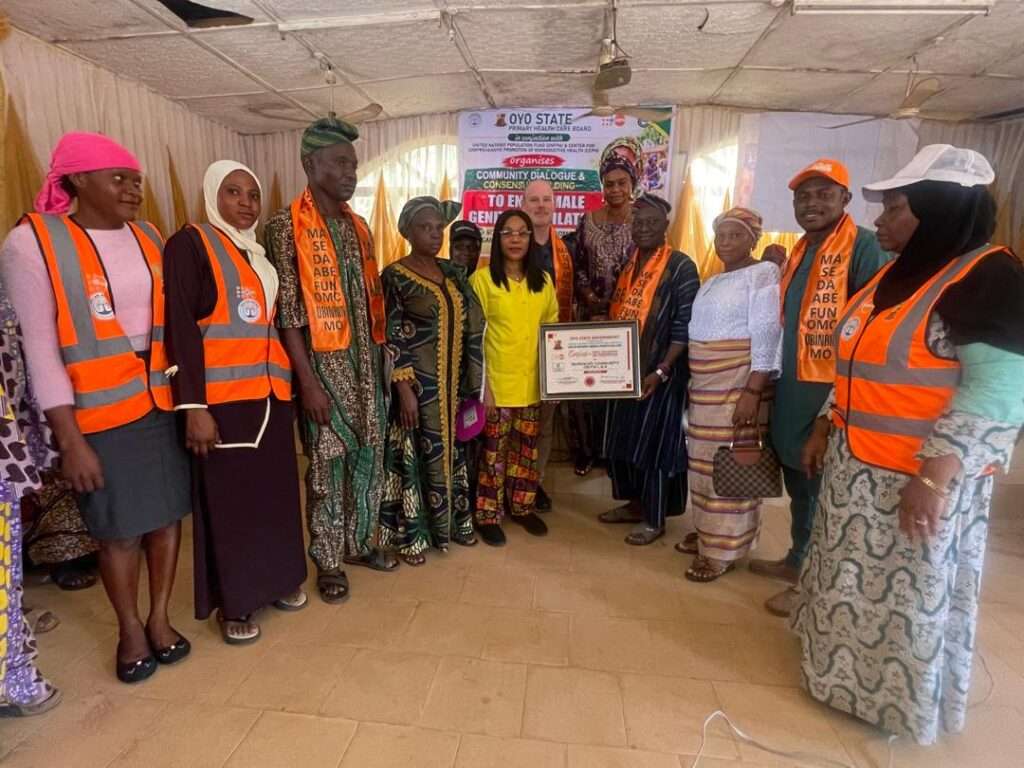
A major highlight of the programme was the presentation of Certificates of Public Declaration for the Abandonment of Female Genital Mutilation to the participating communities. The certificates represented the communities’ collective commitment to ending FGM and protecting girls and women from its harmful consequences.
The initiative forms part of the ongoing collaboration between OYSPHCB, UNFPA and CCPRH to promote reproductive health, protect the rights of women and girls, and eliminate harmful traditional practices across Oyo State. The partners stressed the importance of sustained advocacy, community participation and collaboration with traditional institutions to ensure that the public declarations translate into lasting behavioural change.