


Turn on the television in Abuja and you will see a country that is winning. Graphs point upward, officials speak of stability, and press statements celebrate reserves, growth, and a stronger naira. Change the channel to real life, and you will see a country that is struggling. A trader counts her losses before noon, a student skips lunch to save transport fare, and a mother divides one meal into two. One country is being reported. Another country is being lived.
This is the paradox of November 2026. The Central Bank can boast of $55.22 billion in external reserves at end-October, the highest in 18 years. The naira, which collapsed to about ₦1,669 to the dollar on the official market in late 2024, ended October 2026 at ₦1,346. Investors are smiling. Yet the ordinary citizen is asking a painful question. If things are better, why is life harder? If the answer cannot be felt, it has not been answered.

The first reason is that the market has refused to listen to Abuja. When the naira fell, prices rose overnight. Now that the naira has recovered, prices have refused to fall. Food sellers say their own costs remain high. Transporters say fuel, spare parts and levies have not reduced. Landlords say rent will not come down. The result is a strange economy where the currency recovers but the cost of living stays stubborn. A family that struggled in 2024 is still struggling in 2026, only with more disappointment.
The second reason is that income has stood still while everything else moved. Salaries in many offices, schools and media houses have not changed in years. For traders, artisans and students, there is no salary to review at all. They live on what they can make daily, and daily earnings are being eaten by transport and food costs. When a man earns the same amount but spends twice as much to survive, he is not living, he is merely enduring.
This is the reality of the informal sector, where most Nigerians truly work. The market woman, the vulcaniser, the hairdresser, the okada rider and the farmer have no employer to write to for a raise. They have no pension, no health insurance and no paid leave. When prices rise, they carry the loss alone. When customers disappear, they go home with nothing. They are the backbone of the economy, yet they are the least protected by it.

This pressure has pushed millions into the hands of loan apps. A woman borrows to pay school fees. A young graduate borrows to buy food. A trader borrows to restock. Within weeks, interest charges turn a small loan into a heavy burden. The apps do not ask about hardship. They only demand repayment. In this way, hardship itself has become a market, and the poorest Nigerians are its biggest customers.
The third reason is that more money is coming to states, but less service is reaching the people. Between 2022 and 2025, the combined revenue of the 36 states jumped from about ₦4.99 trillion to ₦15.53 trillion, according to FAAC data. That should have meant better roads, better hospitals and better schools. Instead, many citizens still buy water, still pay for private security, still suffer power failure, and still send their children to overcrowded classrooms. In recent weeks, people in Lagos, Abuja, Ogun, Kwara and Oyo sat in darkness while agencies traded blames over gas supply. Wealth without service is not progress. More money must mean more evidence.
Behind the high food prices is another silent crisis, the farm crisis. Many farmers in the North cannot farm freely because of kidnapping and banditry. When a farmer stays at home for fear of attack, the whole nation pays for it in the market. The yam seller in Ekiti and the rice seller in Lagos are both paying the price of insecurity. Any economic plan that ignores the farm will always fail at the table.
Debt is also eating the future. With total external debt, including private and short-term debt, estimated at about $145.02 billion at the end of 2025, according to the World Bank’s International Debt Report 2026, a large share of national income now goes to repayment. Money that should build classrooms and hospitals is used to settle old loans. The present generation is paying for past borrowing, while the next generation is left with fewer opportunities.
That is why many young Nigerians are leaving. They are not leaving because they hate Nigeria. They are leaving because they cannot find work, cannot afford rent, and cannot see hope. Every doctor, nurse, teacher and engineer who leaves is a loss that no exchange rate can replace. A nation cannot celebrate recovery while its youth are running away from it.
We must also speak plainly about women and children, who bear the heaviest weight of this hardship. In many homes, the mother eats last or skips her meal so her children can eat. A girl drops out of school because fees have risen, while a boy is sent to hawk on the street. Children go to school on empty stomachs and are expected to learn and pass. When we talk of recovery, we must ask, has it reached the mother and the child? If it has not reached the mother, it has reached no one.
To make matters worse, danger is gathering on two fronts. The 2027 elections are approaching, a period that usually brings wasteful spending and tension. Globally, oil prices have been unstable. Brent crude, which peaked above $115 per barrel in late October, has since fallen below $90. Yet pump prices have not followed. Petrol still sells for as high as ₦1,420 per litre in Abuja and ₦1,370 in Lagos, despite the fall in crude. If government does not act early, the small gains of today will be wiped out by the politics and crises of tomorrow.
Some will say we are too hard on government, that stabilisation was necessary and that we should be patient. That argument is fair. No serious person expects overnight miracles, and without stabilisation, things could have been worse. But stabilisation without relief is half work. The people have been patient through subsidy removal, devaluation and inflation. Patience must now be rewarded with relief.
Nobody is asking for magic. What Nigerians are asking for is evidence. Let the stronger naira lead to cheaper food. Let increased state revenue lead to visible projects. Let the fight against insecurity allow farmers to return to their farms. Let loan apps be controlled so they stop feeding on the desperate.
Let these promises carry clear time, for decision without deadline is delay. Let states publish their monthly spending before the end of this year, let regulators cap loan app interest within 90 days, and let security agencies secure at least five major farming corridors before the next planting season.
And the duty is not for government alone. Citizens must also demand accountability without violence. We must ask our governors what they did with increased allocation. We must ask our local chairmen what they did with autonomy. We must refuse to sell our votes for rice and money that will finish in a day, while hunger lasts for four years.
The time has come to change the way we measure success. Success should not be measured only by reserves in the vault or figures on a screen. It should be measured by the mother who can now buy a full basket with her money, by the student who can pay fees without borrowing, and by the farmer who can go to his farm without fear.
In the end, a nation is not judged by what is said on television. It is judged by what is eaten at home, what is paid at the market, and what is left in the pocket after a day of work. When the story on the screen and the story on the street become one story, then we will know that Nigeria is truly recovering. Until then, we must keep telling the truth, keep demanding better, and keep refusing to confuse figures with food.
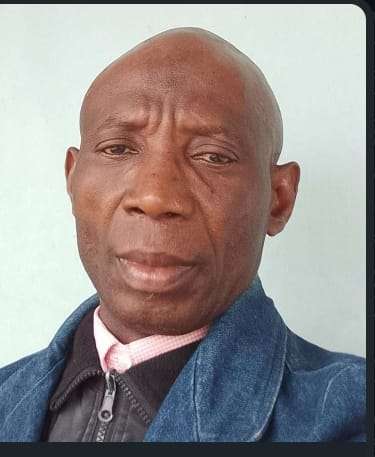
Fẹ́mi Akínṣọlá is a public affairs analyst and development writer.