


Over 60,000 visitors are expected to attend the maiden edition of Oyo Empire Day holding between December 17th -19th this year as the Alaafin of Oyo, His Imperial Majesty, Oba Abimbola Akeem Owoade I, opens ancestral homecoming for Oyo descendants worldwide.
Organisers of the celebration, who are projecting an average daily turnout of 20,000 people during the three-day event, said the festival is aimed at reconnecting people of Oyo ancestry across Nigeria and the diaspora with their ancestral roots.
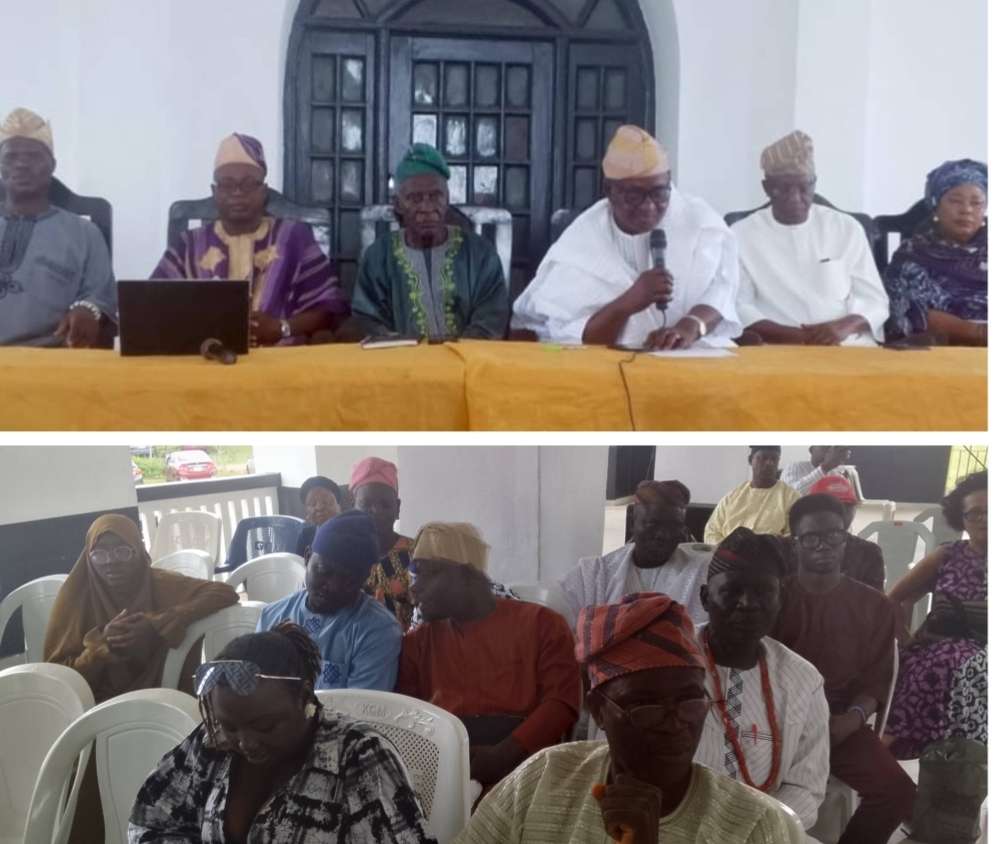
Chairman of the Oyo Empire Day Central Working Committee, Dr Adekunle Ogunmola, disclosed this on Wednesday during a media chat at the Palace of the Alaafin of Oyo.
Ogunmola said, “As a maiden edition, we are currently envisaging an average attendance of approximately 20,000 people per day.”
With the celebration scheduled for three days, the projection translates to about 60,000 attendances during the event.
Ogunmola said the celebration was conceived by the Alaafin as an annual platform for people of Oyo ancestry to return home, reconnect with their families, celebrate their heritage and explore opportunities for cultural and economic development.
“Oyo Empire Day is essentially an initiative of His Imperial Majesty, the Alaafin of Oyo. He conceived the idea of creating an annual platform through which people of Oyo ancestry, wherever they may be, can reconnect with their roots, celebrate our shared heritage, and collectively look towards the future,” he said.
He said the initiative was not restricted to Oyo-Atiba but extended to communities with historical links to the old Oyo Empire.
Ogunmola listed Kwara, Ogun, Osun, Ondo, Ekiti, Lagos and Kogi states, as well as other parts of Nigeria, the Republic of Benin and the wider diaspora, as areas where people with historical Oyo connections could be found.
He stressed that the celebration was not intended to impose Oyo identity on communities that had developed their own distinct identities, but to recognise and celebrate their historical connections with the old empire.
The chairman said more than 100 ancestral family compounds in the ancient city of Oyo had already been sensitised ahead of the celebration to receive returning descendants.
He added that a map identifying ancestral family compounds would be installed at the Palace to assist visitors in locating their family roots.
According to Ogunmola, the three-day programme will feature cultural displays, historical presentations, academic discussions, theatre, youth programmes, tourism activities and entertainment.
He said the first day would begin with a carnival-like procession from Owode to the Palace of the Alaafin, featuring Gelede, Egungun, Sekere, Dundun, Bata, Ijala and horse riding.
The Alaafin is expected to formally declare the celebration open, while artists will portray the first five Alaafins based on available historical records.
A replica of Oyo-Ile, the historic capital of the Oyo Empire, will also be displayed within the Palace complex throughout the celebration.
Ogunmola said the second day would focus on history, scholarship, theatre and youth, including lectures, colloquia and a performance of Ajagunla, the historical theatre work associated with the late Duro Ladipo.
The third day will feature the grand finale at the Durbar Stadium, with royal, cultural, family and community parades.
The committee also plans guided heritage excursions to Oyo-Igboho and Oyo-Ile, where participants will visit historic sites and remnants associated with the old Oyo Empire.
Other attractions include an Amala Oyo Pavilion and visits to local Aso Ofi production sites.
“We want people to eat Oyo, wear Oyo, see Oyo, hear Oyo, learn Oyo, and experience Oyo,” Ogunmola said.
He stressed that the celebration was non-partisan and was not intended to recreate the old Oyo Empire as a political entity or claim superiority over other Yoruba communities.
Ogunmola said the long-term plan was to develop the event into an annual international homecoming capable of promoting heritage preservation, historical research, tourism and economic development.
He disclosed that the proposed Museum of Yoruba Culture and Civilization and Oyo Empire Day Hall of Fame were part of the broader plans to establish permanent heritage institutions.
The chairman announced that Oyo Empire Day would be held annually on the third Thursday, Friday and Saturday of December.
He said the event could create business opportunities for hotels, restaurants, transport operators, artisans, farmers, performers, tour operators, photographers and fashion designers.
Ogunmola also urged the media to help reach people across Nigeria and the diaspora who may have family histories linking them to Oyo.
“We want them to know that Oyo is opening its doors. Come home, find your family, meet your kin, learn your history, share your story, and help us build something that will outlive this year’s celebration,” he said.
Meanwhile, the Head of Department, Alaafin Institute of Yoruba Studies of the Emmanuel Alayande University of Education, Oyo, Prof. Akin Alao, said an academic colloquium would form part of the intellectual component of the celebration.
Alao said the colloquium, themed “Oyo Empire: Yoruba Identity, Empire and Civilisation,” would examine the historical development, political organisation and civilisational achievements of the Oyo Empire and its place in Yoruba and West African history.
He said the forum would also examine the relationship between the Alaafin, Oyo Mesi, Ogboni, provincial authorities and other institutions, particularly how power was distributed and restrained within the Oyo political system.
According to him, the colloquium will bring together scholars, traditional rulers, students, archivists, cultural practitioners, policymakers and other stakeholders to examine the relevance of Oyo’s political heritage to contemporary governance, civic education and cultural preservation.
In his own remarks, Archbishop Emeritus Ayo Ladigbolu stated that the celebration will help exhibit more of the grandeur and glory of what the Oyo Empire is known for.
Others who spoke, including the Youth Coordinator for the Youth Forum of the Oyo Empire Day, Tobi Alaka, a member of the Committee, Professor Nassar Lanrewaju and the Iyaloja of Oyo, Chief Mrs Adepeju Bakare among others, assured that no stone will be left unturned towards the successful hosting of the festival.
Institutions expected to participate include Emmanuel Alayande University of Education, Ajayi Crowther University, Ladoke Akintola University of Technology, Bowen University, University of Ilorin, Kola Daisi University and the University of Ibadan.