
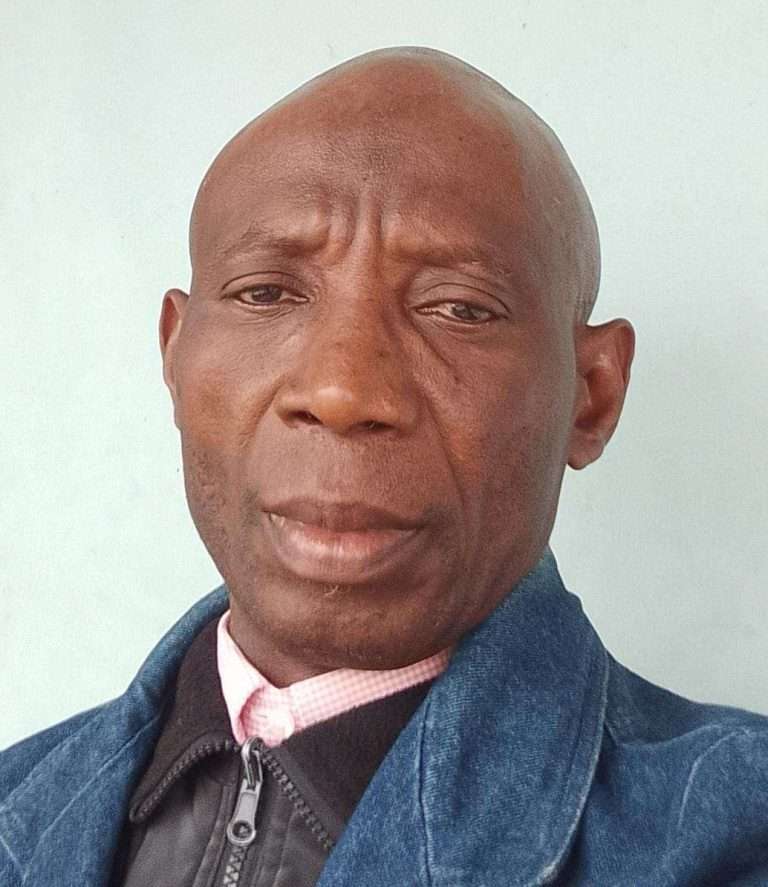


The tragedy of Professor Ayo Bamgbose’s passing is not that Nigeria has lost a scholar of uncommon brilliance. The tragedy is that we never truly had him, not in the way that matters.
For sixty years, this eminent linguist stood before us like a prophet in the wilderness, telling us precisely how to harness our linguistic diversity for national development. For sixty years, we nodded approvingly, awarded him honours, invited him to deliver lectures, and then promptly ignored everything he said.
We have eulogised him as a national treasure while treating his life’s work as an inconvenience. We have praised his scholarship while defunding the institutions he built. The hypocrisy is staggering. Nigeria did not merely fail to implement Bamgbose’s recommendations. We actively betrayed them, preferring the comfort of linguistic hierarchy to the hard work of genuine inclusion.
The question now is whether we will continue this betrayal or finally honour his memory with action rather than oratory.
The economic dimension of this betrayal is damning. Bamgbose demonstrated that mother-tongue education enhances cognitive development and that bilingual populations are more adaptable and economically productive.
Yet we have systematically excluded the majority of our population from economic participation by conducting virtually all formal activity in English. Sixty per cent of Nigerians lack functional proficiency in English, yet our banking system operates exclusively in that language. A trader in Kano cannot access credit. An artisan in Onitsha cannot bid for government contracts. A farmer in Benue cannot understand agricultural extension materials.
Each of these barriers represents millions in foregone economic activity. Meanwhile, nations that have integrated indigenous languages into their development strategies, including China, India, Singapore, and South Africa, have reaped substantial dividends.
The creative economy has exposed our hypocrisy. Nollywood generates billions precisely because it operates in languages Nigerians actually speak. We celebrate this commercial triumph while simultaneously treating its linguistic foundations as inferior. This is not merely inconsistency. It is active economic sabotage.
The political implications of our linguistic negligence have become catastrophic. Bamgbose understood that genuine national unity cannot be imposed through linguistic homogenisation. It emerges when citizens can communicate across ethnic boundaries and participate in governance in languages they understand.
English, far from being the unifying force its proponents claim, has become a barrier between the educated elite and the masses. Our recurring ethnic conflicts are fundamentally communication failures. When citizens cannot speak across ethnic lines, stereotypes flourish and understanding withers.
Bamgbose advocated developing Nigerian languages as bridges between communities. Countries embracing linguistic diversity experience lower rates of secessionist agitation. Citizens who participate in governance in their own languages develop stronger attachments to the state.
The institutionalisation of multilingual governance, including parliamentary proceedings in indigenous languages and government documents in major Nigerian tongues, would signal genuine commitment to inclusion. Instead, our political class has chosen selective hearing, ignoring the uncomfortable implications for their own monolingual privilege.
No area of Bamgbose’s work carries more shame than educational reform. For sixty years, he demonstrated with rigorous empirical evidence that children learn best in their mother tongue and that Nigeria’s educational crisis is fundamentally linguistic. Students in mother-tongue immersion programmes consistently outperform their English-medium counterparts across every measurable metric.
Yet we continue to force millions of children into classrooms where they cannot understand the language of instruction. Our out-of-school figures now exceed twenty million. While poverty and inadequate infrastructure are contributing factors, the pedagogical approach Bamgbose spent his career warning against is a primary driver.
Children who cannot understand their teachers do not simply fall behind. They drop out. They disengage. They internalise failure.
The solution Bamgbose prescribed was additive bilingualism: teaching in the mother tongue while systematically introducing English as a second language. This approach is neither complicated nor expensive. It produces students competent in both languages rather than proficient in neither. It reduces dropout rates, and creates a population better equipped for higher education and economic participation. We have known this for sixty years. We have chosen not to act.
Bamgbose was also a scholar of language preservation, documenting Yoruba orthography and developing frameworks for language maintenance. His warnings have proven prescient. UNESCO estimates that one Nigerian language dies every decade. Of approximately five hundred indigenous languages, over one hundred are critically endangered, with only a few elderly speakers remaining.
This loss is not merely cultural tragedy. It is strategic national loss. Each language represents accumulated knowledge about agriculture, medicine, ecology, and social organisation accumulated over centuries. Nigeria’s biodiversity, traditional healing systems, and sustainable agricultural practices exist only in indigenous languages.
By allowing these languages to disappear, we erase knowledge that might address climate change, food security, and public health. Bamgbose’s orthography work was a practical intervention to preserve this knowledge, yet government investment in language documentation has been minimal. The National Institute for Nigerian Languages, established to carry forward his vision, operates on a fraction of the resources needed to fulfil its mandate. This is cultural vandalism dressed in bureaucratic indifference.
Beyond government failures, the scholarly community bears significant responsibility for the gap between research and implementation. Bamgbose mentored generations of linguists, yet research papers gather dust while the crises they diagnose continue. Scholars produce knowledge in academic language that rarely reaches policymakers. They frame findings as theoretical rather than practical. They publish in journals that only other academics read.
Our linguists must become policy advocates, engaging directly with government, educational institutions, and media to translate findings into actionable programmes. They must demand that research influence policy and hold government accountable.
All levels of government must implement mother-tongue education in early primary education, ensure public services are accessible in major Nigerian languages, and mandate indigenous language content in broadcasting. These are standard practices in multilingual countries worldwide. If South Africa can operate with eleven official languages and India with twenty-two, Nigeria has no excuse for its monolingual pretensions.
Perhaps the most overlooked element of Bamgbose’s vision is Pidgin English, which he recognised as Nigeria’s most significant unplanned linguistic development. Spoken by over one hundred million Nigerians, Pidgin is inclusive, accessible, and organic. It requires no formal education, transcends ethnic loyalties, and enables communication between people who share no other common language.
Yet Pidgin remains marginalised, treated as the language of the uneducated and excluded from formal settings. Bamgbose demonstrated that Pidgin could serve as a national lingua franca without displacing other languages. It complements Yoruba, Hausa, and Igbo while enabling cross-cultural communication.
The potential is transformative. This includes Pidgin-medium education in ethnically diverse urban centres, Pidgin in government communications, and Pidgin in healthcare campaigns to ensure inclusivity. We have ignored Pidgin because it does not fit our colonial hierarchies, but Bamgbose understood that Nigeria’s linguistic future would be determined by what works, not by colonial ideology.
Professor Ayo Bamgbose will be remembered not for the titles he held, but for the uncomfortable truths he told us and the solutions he left behind. His work was never about language for language’s sake. It was about access. Access to education, to economic opportunity, to government, and to one another.
We cannot bring him back. But we can still choose what we do with what he gave us. The blueprint exists. The evidence is settled. The cost of inaction is already visible in our classrooms, our markets, and our divided politics.
Honouring Bamgbose now means moving his ideas from the library shelf to the policy table. It means funding the National Institute for Nigerian Languages properly. It means piloting mother-tongue education in three states and measuring the results. It means giving Pidgin and our major languages a place in public communication.
If we do this, his sixty years of scholarship will not have been in vain. If we do not, the next generation will write the same eulogy about us that we are writing about him today. The choice, as it has always been, is ours.
Copyright © 2026 Femi Akinsola. No part of this publication may be reproduced, distributed, or transmitted in any form or by any means, including photocopying, recording, or other electronic or mechanical methods, without the prior written permission of the author.