

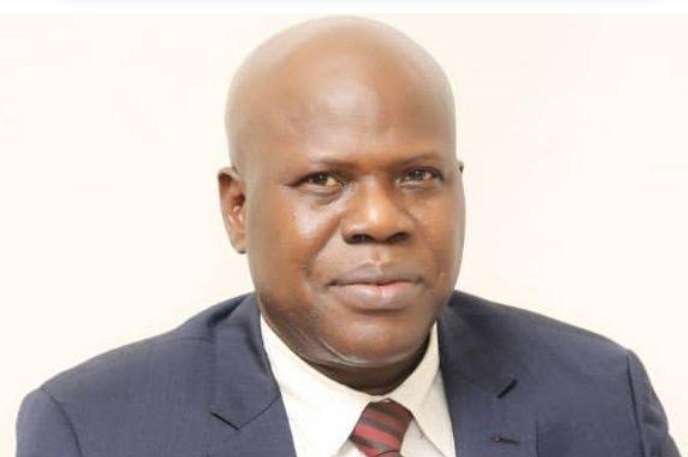
By Richard Odusanya

There are moments in the life of a nation when events accumulate with such troubling consistency that silence itself begins to feel dishonest. Nigeria appears to be approaching one of those moments.

Across the country, insecurity deepens, economic hardship expands, public trust weakens, and national cohesion continues to suffer dangerous strain. The signs are everywhere: rising social frustration, growing disillusionment among the youth, widening distrust among ethnic groups, and an increasingly visible loss of confidence in institutions once expected to bind the country together.
It is difficult at such moments not to recall the haunting relevance of Professor Chinua Achebe’s immortal title, Things Fall Apart. Achebe may have written within the context of colonial disruption and cultural collision, but the phrase now resonates with unsettling force in contemporary Nigeria. For many citizens, it increasingly feels as though the centre can no longer hold.
The tragedy is not merely that Nigeria faces challenges. Every nation does. The deeper tragedy is that a country once regarded with immense continental promise now struggles under the weight of accumulated contradictions it has repeatedly refused to confront honestly.
At independence, Nigeria stood before the world as a nation of enormous possibility. With its population, intellectual capacity, natural resources, entrepreneurial energy, and strategic importance, many believed the country would emerge as a stabilizing democratic and economic force within Africa and beyond. There was optimism. There was expectation. There was hope.
Today, however, many citizens look upon the same nation with anxiety rather than confidence.
The present crisis extends beyond economics alone. It is also psychological, institutional, and moral. Across various parts of the federation, citizens increasingly question not only the direction of governance, but the very character of the national project itself. Insecurity has normalized fear. Economic hardship has deepened desperation. Corruption has weakened institutional credibility. Ethnic and religious suspicions continue to distort national conversation. Meanwhile, leadership itself often appears trapped within cycles of political survival rather than long-term nation-building.
The consequence is a growing crisis of national consciousness.
Many Nigerians no longer feel emotionally connected to the state in the way healthy democracies require. Patriotism weakens where justice appears selective. Faith in institutions declines where accountability is inconsistent. National identity suffers where citizens increasingly retreat into ethnic, regional, or religious shelters for psychological security.
This is the dangerous point Nigeria must avoid.
Because nations do not collapse only through war or military overthrow. Sometimes, they weaken gradually through erosion of trust, institutional fatigue, elite irresponsibility, widening inequality, and the normalization of hopelessness.
Nigeria therefore requires more than policy adjustments. It requires serious national introspection.
The country must begin to ask difficult but unavoidable questions:
What kind of federation are we truly operating?
Why do institutions remain persistently weak despite repeated democratic transitions?
Why does public office continue to appear more attractive for personal advancement than public service?
Why do citizens increasingly feel disconnected from governance?
And perhaps most importantly: what new national model can genuinely sustain unity, development, accountability, and inclusion within a deeply diverse society?
These questions cannot continue to be postponed indefinitely.
The old assumptions no longer appear sufficient. The inherited structures of governance have struggled repeatedly under the pressure of corruption, over-centralization, weak institutions, economic imbalance, and political distrust. The nation therefore requires a fresh governing philosophy rooted not merely in slogans, but in institutional redesign, responsible leadership, social justice, economic productivity, and civic trust.
A new national model does not necessarily mean dismantling Nigeria. Neither does it imply abandoning democracy. Rather, it requires rethinking how governance functions, how power is distributed, how accountability is enforced, and how citizens reconnect meaningfully with the state.
Such a model must place greater emphasis on:
– institutional strength over personal influence;
– productivity over patronage;
– justice over selective protection;
– competence over ethnic entitlement;
– and citizenship over narrow sectional loyalties.
It must also confront the economic realities facing ordinary Nigerians. A nation cannot sustainably build democratic stability where millions remain trapped in unemployment, inflation, insecurity, poor education, and declining social mobility. Economic dignity is not separate from national stability; it is one of its foundations.
Equally important is leadership culture.
Nigeria’s future cannot continue to be negotiated primarily around elections while neglecting governance quality between electoral cycles. Leadership must once again be understood as stewardship rather than entitlement. Public office must recover its moral seriousness.
This is why the present moment should not merely provoke political argument; it should provoke national reflection.
The danger before Nigeria is not simply hardship. The greater danger is the gradual acceptance of decline as normal. Once citizens begin to lose confidence that institutions can protect them, opportunities can expand for them, or governance can improve their condition, democratic legitimacy itself begins to weaken.
Yet despite everything, Nigeria still possesses immense possibilities.
The country retains extraordinary human capital, entrepreneurial resilience, cultural influence, intellectual depth, and strategic relevance within Africa. What remains uncertain is whether the political and institutional structure currently managing those strengths is still adequate for the demands of the present age.
That is the conversation Nigeria must now confront honestly.
The nation cannot continue merely managing crises from election to election while avoiding deeper structural reflection. The moment demands courage from leadership, sincerity from institutions, and responsibility from citizens themselves.
Achebe’s warning through literature was never merely about collapse. It was also about the consequences of societies that ignore internal contradictions until fragmentation becomes unavoidable.
Nigeria still possesses the opportunity to change course.
But the window for serious national renewal may not remain open indefinitely.
Odusanya can be reached via [email protected] and @richardODUSANYA