The Frontida Zois Initiative, in collaboration with the United Nations Population Fund (UNFPA), has intensified efforts to eradicate Female Genital Mutilation (FGM) in Oyo State with a comprehensive sensitisation and awareness programme held for residents of Lagelu Local Government Area, Ibadan, Oyo State

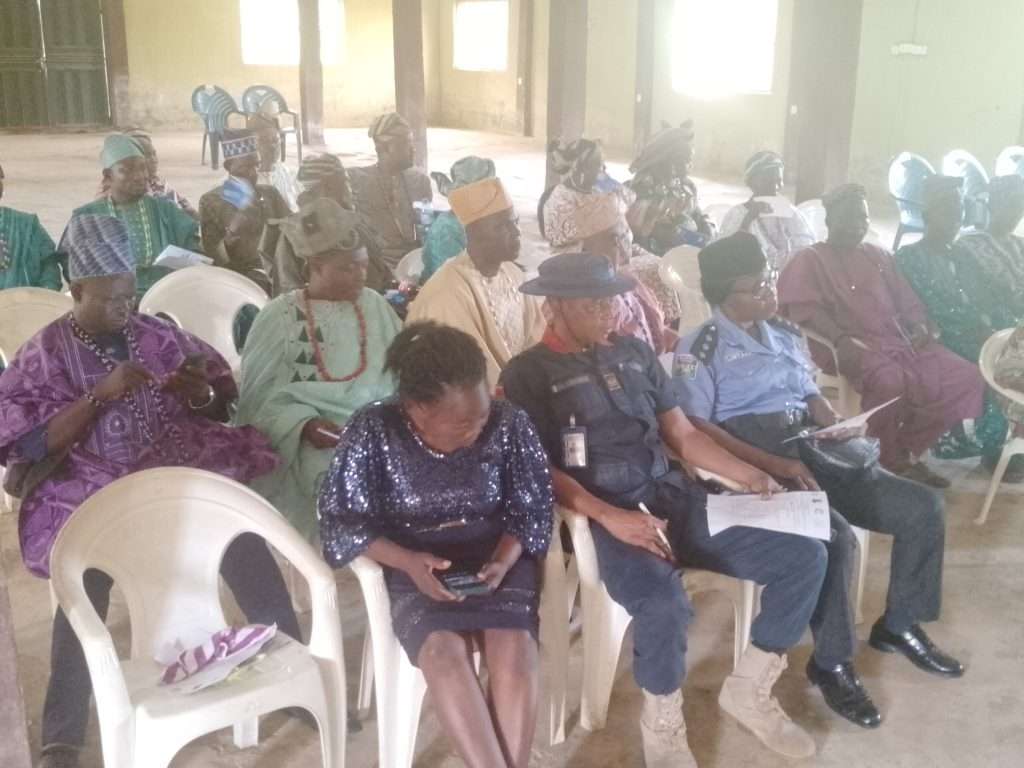
The event, held at Teacher hall, Lagelu Local Government Council area which brought together community leaders, traditional leaders, community influencers, women groups, youths, health practitioners, security agencies and local stakeholders, was aimed at educating the public on the dangers of FGM, promoting behavioural change, and strengthening community support for the total abandonment of the harmful practice.

Speaking at the programme, Field Officer of Frontida Zois Initiative, Tobiloba Oloyede described FGM as a grave violation of the rights of women and girls, stressing that the organisation remains committed to ending the age-long practice through grassroots advocacy, education, and community mobilisation.
He noted that although Oyo State has recorded progress in reducing cases of FGM, there is the need for some communities in the state to abandon the age long practice in order not to further endanger lives of the female child.
“The purpose of this awareness program in Lagelu Local is to sensitize the community leaders so that they too in turn will go and educate their people on the need to do away with the practice, noting that some still hold on to the practice due to cultural belief systems, myths, and the fear of social stigma.
Oloyede emphasized that only collective action, continuous education, and community engagement can bring about total eradication from the practice.
“Female genital mutilation is not just a cultural issue; it is a major public health concern that endangers the physical, emotional, and psychological well-being of our women and girls,” he said. “Today’s programme is part of our long-term commitment to empower communities with accurate information, challenge harmful norms, and encourage healthier alternatives.”
Speaking, the Chief Executive Officer, Frontida Zois Initiative, Mrs Petra Ogunfowokan said the project is an advocacy to end Female Genital Mutilation in Oyo State, adding that Frontida Zois Initiative is implementing the Project in five communities in Lagelu LGA.
“The goal is to create awareness and sensitize communities on the need to end Female Genital Mutilations through training High Profile EndFGM.
Champions/Surveillance, conduct a series of community dialogues, and consensus building with critical stakeholders in the community and with law enforcement agencies within the local government.”
According to her, Frontida Zois Initiative Intends to bring total abandonment to Female Genital Mutilation in the Oyo State, community by community before 2030.
“Frontida Zois Initiative (FZI) intends to bring total abandoment to Female Genital Mutilation in the Oyo State community by community before 2030”
Representatives of Center for Comprehensive Promotion of Reproductive Health (CCPRH), University College Hospital, (UCH), Miss Agnes Aderinola Oyeniran lauded the United Nations Population Fund (UNFPA) for partnering FZI on the programme, adding that the UN agency’s dedication to supporting initiatives is aimed at protecting the rights and dignity of women and children.
She commended the Frontida Zois Initiative for its consistency in grassroots advocacy and stressed that FGM has no health benefits, only lifelong complications.
According to her, Nigeria remains one of the countries with the highest prevalence of FGM globally, with millions of girls at risk annually. He noted that collaborative efforts with the media, civil society organisations among othe agencies are essential to achieving the global target of eliminating FGM by 2030.
Miss Oyeniran used the occasion to educated participants on the medical consequences of FGM, including severe bleeding, infections, complications in childbirth, infertility, and long-term emotional trauma. She urged parents and caregivers to embrace modern medical knowledge and prioritize the safety and rights of their daughters.
b
Participants engaged in interactive sessions, testimonies, and group discussions aimed at strengthening community ownership of the anti-FGM movement. Many expressed gratitude for the programme, noting that the information provided had dispelled long-held myths about the practice.
The sensitisation exercise also featured distribution of educational materials, demonstrations by trained facilitators, and the formation of community support groups to sustain advocacy efforts across the various wards in Lagelu Local Government.
In her closing remarks, Oyeniran reaffirmed that the fight against FGM requires unwavering dedication and collaboration from all sectors — government agencies, NGOs, community leaders, youths, and families. She called for ongoing support to ensure that no girl in Lagelu Local Government or anywhere in Oyo State is subjected to the harmful practice again.
Traditional rulers and community leaders present at the event pledged their commitment to supporting the campaign. They acknowledged the need to dispel cultural misinformation and promote practices that protect the health and future of girls in the community.
The Baale’s and their communities are; Oba Samuel Oludele Folarin – Olorunda-Abaa community, Baale Francis Olusola – kajola community, Baale Wahab Odeyemi – Ayegoro community, Baale Sunday Alamu – Apatere community, and Baale Lawal R. – Molunkan community.
The event concluded with a strong collective declaration by participants to join the movement for a total end to female genital mutilation in their communities.