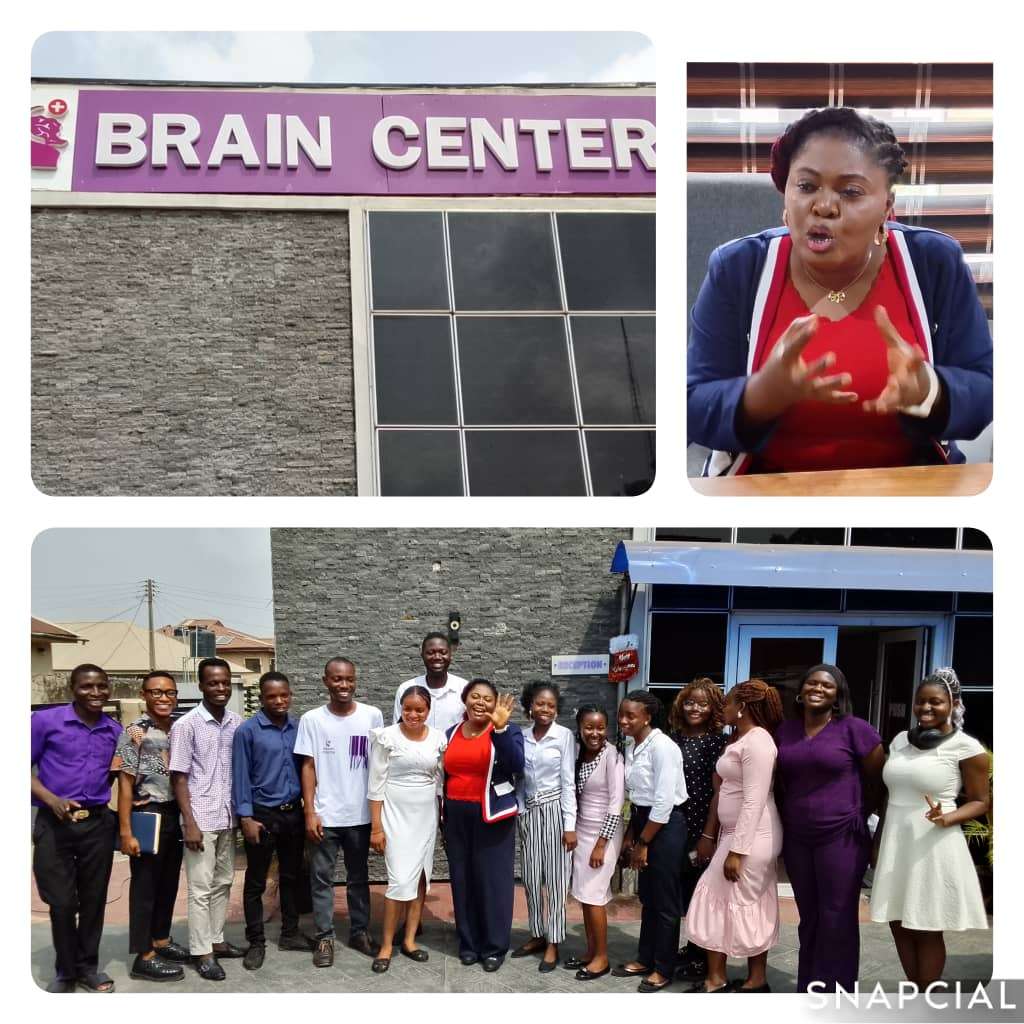
A consultant neurologist, Dr. Temitope Farombi, has raised alarm over the rising prevalence of neurological disorders in Nigeria, warning that the country lacks essential drugs, rehabilitation facilities, and preventive strategies to tackle brain diseases effectively.

Dr. Farombi, a consultant neurologist at the University College Hospital (UCH), Ibadan, and founder of Brain Centre Neurological and Rehabilitation Services, spoke during activities marking the first anniversary of the Brain Centre in Ibadan. She was joined by Esther Erigbemi Farinu and Samuel Oluwaseun Babalola.

Launched in January 2025 as a one-stop facility for neurological and rehabilitation care, the Brain Centre has treated over 160 neurological cases within its first year, reflecting the growing burden of brain-related conditions in the country.
According to Farombi, many neurological disorders affecting Nigerians are largely preventable, yet government policies and healthcare investments remain focused on treatment rather than prevention. She identified autism, stroke, dementia, Parkinson’s disease, and traumatic brain injury as increasingly common conditions that now rank among the leading causes of disability.
“Prevention is always cheaper and more effective than treatment,” Farombi said. “A simple tetanus vaccine costing a few hundred naira can prevent a disease that may require close to ₦2 million to treat, often with poor outcomes. The same principle applies to stroke and other neurological disorders.”
She explained that preventing stroke through routine medical checks and medications may cost between ₦10,000 and ₦15,000 monthly, while treating a stroke could demand ₦1 million to ₦2 million, a financial burden many families cannot meet in a largely out-of-pocket healthcare system.
Highlighting the genetic component of some neurological conditions, Farombi noted that individuals with a family history of autism may pass it down genetically, making premarital and pre-pregnancy genetic testing crucial. However, unlike sickle cell screening, genetic testing for autism risk is expensive and largely inaccessible.
“This is where government intervention is critical,” she said. “Affordable genetic testing, proper antenatal care and early specialist referrals during pregnancy can prevent avoidable complications.”
Farombi also advocated for non-pharmacological interventions, particularly social prescription, which includes activities such as gardening, exposure to green spaces, dancing, music, and travel. Scientific evidence indicates that social and environmental factors significantly influence brain function and disease outcomes.
“For patients with dementia or Parkinson’s disease, dancing, music, and social engagement can improve movement, mood, and awareness,” she said, adding that confinement indoors and social isolation often worsen their conditions.
On government responsibility, she noted that health insurance coverage in Nigeria remains below 10 per cent, while essential neurological drugs are often unavailable or unaffordable. She revealed that some patients with conditions like multiple sclerosis spend up to ₦500,000 per treatment session.
She further lamented the lack of advanced neurological treatments and community-based rehabilitation centres, stressing that rehabilitation services should be accessible within communities rather than confined to hospitals.
“Neurological conditions are the leading cause of disability globally,” Farombi warned. “Without strong prevention strategies, drug availability, rehabilitation services, and public education, Nigerians will continue to spend millions treating diseases that could have been prevented.”