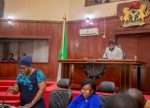
The Oyo State House of Assembly has passed the 2026 Appropriation Bill into law, approving a total budget of ₦892,085,074,480.79 for the fiscal year.

The bill was passed following the consideration and adoption of the report of the House Committee on Finance, Appropriation and State Economic Planning.

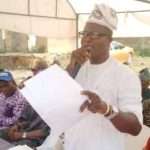
Speaking with Assembly Correspondents shortly after the passage, Hon. Olasunkanmi Babalola, Member representing Egbeda State Constituency, Deputy Leader of the House, and Chairman of the Finance, Appropriation and State Economic Planning Committee, described the development as historic, reaffirming the Assembly’s commitment to fiscal discipline, infrastructure development, and effective governance.
According to him, the budget process involved a thorough review of allocations to all Ministries, Departments, and Agencies (MDAs), resulting in strategic adjustments to ensure optimal use of public funds.
“It was a comprehensive exercise across all MDAs. We identified areas where funds could be better utilized, leading to a strategic reallocation of ₦2 billion from overhead to capital expenditure,” Babalola stated.
He explained that the adjustment reduced overhead costs from ₦389 billion to ₦387 billion, while increasing capital expenditure to over ₦504 billion, reflecting a deliberate shift toward developmental projects and long-term infrastructure investment across the state.
Hon. Babalola assured residents that the 2026 budget was designed to address the priorities of the people and to ensure the continuous delivery of the dividends of democracy.
“As representatives of the people, we are committed to ensuring that this budget translates into tangible benefits across all constituencies. Our House committees will carry out rigorous oversight of all MDAs to guarantee transparency and accountability,” he said.
The Deputy Leader noted that the early passage of the budget before the end of the year has become a legislative tradition in Oyo State, aimed at ensuring effective implementation from the first day of the fiscal year.
“The national budget cycle runs from January to December. Delaying passage until February puts implementation behind schedule. Our objective is a budget that becomes operational from January 1,” he explained.
Reacting to recent concerns raised by Governor Seyi Makinde over indiscriminate waste disposal, Hon. Babalola disclosed that the Ministry of Environment and Natural Resources is a key beneficiary of the 2026 budget.
He added that the House, through its Committee on Environment, would ensure improved waste management and environmental sustainability, in line with the Assembly’s commitment to a transparent and accountable budgeting process.